RSS

Where to eat Wanton Mee in Ipoh - Famous Buntong Wan Tan Noodle @ Cheong Kee

Buntong Wan Tan Noodle @ Cheong Kee


Almost clockwork-like, the camera-shy (or maybe I was a little intrusive?) owner of Cheong Kee dishing out plates after plates, and bowls after bowls of what could possibly be Ipoh’s MOST famous Wan Tan Noodle

Buntong is a small community to the west of Ipoh, with a sizable Indian and Chinese community that are distributed almost evenly, with vibrant Indian temples lining the main street of Buntong, and Chinese schools scattered in the vicinity. Back when I was still a novice when it came to food-hunting of any nature, (read : before this blog was born) I had only the vaguest impression of Buntong; dismissing the town as a rural village with potentially unruly citizens. For which I apologize profusely now, and ate my words and a slice of the humble pie.

Then came the unabashedly-grateful virginal tour around Buntong, which had me downing some smooth “Kai See Hor Fun” (Shredded or Slices of Poached Chicken Meat served with Koay Teow/Flat Rice Noodles Soup) at Buntong Ayam Tauke, and a second excursion which had me eating inside some residents’ compound, relishing the bowl of beef noodles soup and stuffed fish paste (which we Ipohans proudly name them as “Liew” instead of the more common Yong Tau Foo).


With over 40 years of history in its bag, Cheong Kee Wan Tan Noodle is still going strong come rain or shine. Wait, scratch the latter, for the shop is only opened at night. So come rain, or under the moonlight?

But what some of you might not realized is that, during all those mini detours to Buntong, ALL of them were in fact my vain search for a taste of the famed, almost legendary, Buntong Famous Wan Tan Noodle. Or Wan Tan Mee, whichever term you prefer. A street food of Cantonese origin, the thin & springy egg noodles can be served in a stomach-warming soup base, or tossed in a mix of soy sauce, sesame oil, and dark soy sauce. But the common focal point between the two, and what gave rise to the name ‘Wan Tan’ Noodle is the Wantan/Wonton themselves, or meat dumplings (fillings of minced pork or shrimp).

source taken from:http://www.j2kfm.com/


The “Kon Loh Meen”, or Dry Wan Tan Noodle @ Cheong Kee

After failing in my attempts of tasting the humble yet immensely popular Wan Tan Noodle at Cheong Kee in Buntong, I gave up and only went back to Buntong once in a blue moon to replenish my “Kacang Putih” supplies. If you’re thinking what a wimp, for I shuddered at the slight hint of failure, let me clarify this. I actually went for not one, not Two, but THREE miserable attempts mind you. The first was when we went on a weekday evening but the stall was closed for renovation, and to be opened the following night. Second attempt was on a Sunday night, but as luck would have it, that was Cheong Kee’s rest day. And the final straw that broke the camel’s back, the third attempt was all it took to break my spirits. And I can’t even remember for the life of me, the reason why Cheong Kee was closed on the third try. Yeah, with tails between our legs, we scampered off on the third attempt to oblivion, stuffing ourselves with some other grubs. (And I even forgot what we ate after that!)


A funny remark here; The man helping around was actually stunned by my presence, holding a camera and all. Which prompted him to quickly rushed over and arranged the plates and ‘tools of the trade’ in an orderly manner, before I could snap my shot!

After a hiatus of 3 months or so, my courage returned to its full glory. Arriving at a rather late hour of 8.00pm (you’ll know why soon enough), the corner lot of Cheong Kee on Jalan Sekolah in Buntong was packed to the brim! And it did not help one bit that the weather was none too accommodating that evening, with light drizzles eliminating any hopes of being seated at the tables set up at the front portion of the shop. But we persevered, and soldiered on, for I was in no mood to return home empty-handed. Or should that be, with an empty stomach!

So the situation got slightly ugly, almost reminiscence of the Foh San’s vultures-by-the-tables scenario. You get my drift. And thanks be to the good Samaritans of Buntong’s, a table was vacated within minutes, and voila! The rest was history.


Toss ‘em up REAL good, for the gravy to coat every single strand thoroughly, before slurping them into your mouth …..

A glance around the shop revealed that the majority of diners that evening were locals, most probably residents around Buntong area. For none of them was decked in shirts or suits (duh), and everyone looked so much at home (except us maybe). You know the feeling of eating at your favourite roadside hawker stall, when you know what to order without looking at the menu or price list, and you know exactly how you want your serving of Wan Tan Noodle to be; Single, One-Half or Double Mee. Wet or Dry. And additional bean sprouts, or sans the plump, crunchy ‘Tauge’. Or even with extra portion of soup.

With no prior idea on how the Wan Tan Mee at Cheong Kee is served, we ordered both the dry and soup versions, without asking for Char Siew (Barbecued Marinated Pork) or pork and/or prawn Wantan. And gladly so, for Cheong Kee does NOT serve Char Siew with their noodles, unlike the usual servings at other hawker stalls in Ipoh. And only minced pork meat wantan is served (correct me if I’m wrong though).

The springy, homemade egg noodles bears the torch for Cheong Kee, a testament of their classic recipe with emphasis on quality control, the man himself overseeing the whole process, to the extent of being partly involved (manually) in the process of making the egg noodles. Unlike the average wantan noodles, Cheong Kee’s version is stained with a lighter hue of yellow, smoother in texture and devoid (or minimal, as my dining companions claimed their noodles reeked of alkaline/lye water at first bites) of unpleasant, metallic lye water taste. At least my noodles in soup tasted nothing like slurping on alkaline materials.

source taken from:http://www.j2kfm.com/
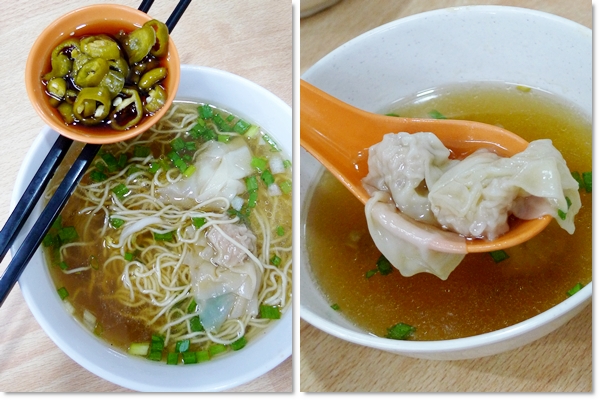
Soup Wan Tan Noodle

The broth with a darker shade of brown was redolent with flavours, which may lead one to a false assumption of thinking that MSG (monosodium glutamate/flavour-enhancer) was added

The toppings of braised pork bits/slices with soy sauce, bean sprouts and garnished with chopped scallions completed the ensemble; a most simple combination to be paired with the dumplings in soup by the side, and of course not forgetting the pickled green chillies for that extra zest. The sweet, umami-flavoured soup was a joy to be slurped, or even drunk. And no hoarse voice nor thirsty spell thereafter, indicating the lack of MSG.

All in all, the wan tan noodles at Cheong Kee may not be the BEST Wan Tan Noodle I have ever tasted (for I prefer mine with decadent chunks of caramelized Char Siew!), and far from the worst. Above average I would say, for the QQ-texture of the egg noodles ex

source taken from:http://www.j2kfm.com/

Be here early, or else ……..

The noodles come in three portions (the usual orders, but of course you can go for triple, or even quadruple portions!), being SINGLE @ RM2.90, ONE-HALF/MEDIUM @ RM3.70, and DOUBLE @ RM4.40. Extra order of ‘wantan’s is of course permissible.

Do arrive early for dinner, as the place can get really, REALLY packed during the peak hours. And since they cook at a slower pace than you might have expected, you may end up waiting for close to one hour for your serving of wan tan noodles !!!! But thankfully, we got ours within 20 minutes.

Address & Contact Numbers :

Cheong Kee Wan Tan Noodle

542, Jalan Sekolah,

Buntong, 30100 Ipoh,

Perak, Malaysia.

Tel No : +605-2550789 or +6019-5166781/+6016-5111282

(Contact numbers from the owner’s son’s blog HERE)

Opens daily from 7.00pm until 12.00 midnight, or until the noodle is sold off.

Closed on Sundays.

Here’s a GOOGLE MAP to CHEONG KEE WAN TAN NOODLE @ BUNTONG, IPOH

source taken from:http://www.j2kfm.com/

  • Digg
  • Del.icio.us
  • StumbleUpon
  • Reddit
  • RSS

HOW TO REMOVE TICKS ON YOUR DOG - They are dangerous to your dog

How to Get Rid of Ticks on Your Dog

Ticks are bad news: They transmit several diseases that can cause severe illness and even death in both dogs and humans, so keeping your dog tick-free is a top priority.

Huge numbers of tick eggs hatch each spring, and the young ticks climb onto grasses and other vegetation. Their sticky shells help them to cling to passing animals, including your adventurous pet dog.

Ticks quickly climb down the hair, attach to the skin, and begin to suck blood, only dropping off hours or days later when they are engorged. In the meantime, any microorganisms that were hitching a ride inside this insect traveler are transmitted to your dog through the tick’s mouth.

Keeping your dog as free of ticks as possible is always the safest bet — not only for your dog, but for you as well. Here are some tick-prevention tips:

During the tick season (April through September), limit your dog’s exposure to known tick-infested areas. Ticks often hide in tall grasses and dense vegetation.

Use a tick preventive during the spring and summer months. Several products on the market kill both fleas and ticks (and why not knock out both at the same time?). You can apply these products monthly to the skin at the back of your dog’s neck. Ask your veterinarian to recommend the most effective product for your dog.

Examine your dog for ticks daily during tick season. If you suspect he has been romping in a tick-infested area, examine him for ticks immediately. Be sure to check inside and behind his ears and around his eyes, all favorite tick hiding places.


To remove a tick, follow these steps:

1.Use a pair of tweezers to grasp the head of the tick where it attaches to the skin.
Wear gloves if you plan to use your fingers to remove the tick.

2.Pull on the tick gently and steadily. If you yank the tick away from your dog too quickly, you’ll leave part of the tick’s mouth behind, which can cause an infection.

In about 20 to 30 seconds, the tick’s mouth will release its grasp and the tick will come away cleanly

3.Dab some disinfectant on your dog on the bitten area, being extremely careful if you’re around your dog’s eyes.

4.Kill the tick by placing it in alcohol.

5.
Save the dead tick in a resealable plastic bag, labeled with the date on which the tick was found.

This may sound weird, but if your dog becomes ill, you may need to identify the species of tick that bit him.

Never remove a tick with your bare hands, and never crush a tick between your fingers. If you do, you put yourself at risk of contracting Lyme disease or one of the other tick-borne diseases.

If your dog becomes ill and you recently found a tick on him, seek veterinary attention immediately. Most tick-borne diseases can be treated successfully if a diagnosis is made immediately and appropriate treatment initiated. If the tick-borne organisms are allowed to gain a foothold, however, these bad bugs can cause serious illness or even death.

source taken from: http://www.dummies.com/

  • Digg
  • Del.icio.us
  • StumbleUpon
  • Reddit
  • RSS

Homemade Dog Food Dangers Table Foods That Harm Dogs Read more at Suite101: Homemade Dog Food Dangers: Table Foods That Harm Dogs


What Crystle a.k.a. can and can't eat?


Homemade Dog Food Dangers

Good nutrition for us does not always mean good for our dogs. Many foods, including grapes, walnuts, and milk can be dangerous for canines.

In the wake of recent pet food recalls, many dog owners have resorted to cooking for their dogs. A homemade diet is one way to know exactly what you are feeding your best friend. However, not all human foods are good for dogs. If you are cooking for your dog or just sharing a snack, make sure he’s not getting something that can cause illness or death.

Alcohol can cause breathing difficulties, abnormal blood acidity, coma and death in dogs. At parties, don’t let anyone offer your dog a ‘drink.’

Avocadoes contain persin which can cause digestive upsets and heart problems.

Bones may splinter and puncture or obstruct the digestive tract.

Broccoli in large amounts can cause illness in dogs.

Chocolate, coffee and tea all contain stimulants that cause abnormal heartbeat, seizures and death in dogs. Chocolate is especially dangerous for dogs.

Corn on the cob is dangerous. Even though the corn will be digested, chunks of cob may obstruct the digestive tract

Grapes and raisins contain an unknown substance that causes kidney failure in dogs.

Liver in large amounts can cause Vitamin A toxicity.

Macadamia nuts contain an unidentified toxin that causes weakness, tremors, panting and swelling in the legs.

Walnuts may have a fungus or mold which causes drooling, jaundice, lack of coordination, and vomiting.

Milk is difficult for some dogs to digest effectively, which leads to G.I. upsets.

Mushrooms and molds can be toxic to dogs. Some varieties are more toxic than others.

Nutmeg is a seasoning that causes tremors, seizures, and death in dogs.

Onions and garlic, both cooked and raw, contain thiosulphate which can cause digestive upsets, hemolytic anemia, and death. Onions contain more of the toxin than garlic does.

Raw egg whites contain avidin which causes B vitamin deficiency, skin problems and skeletal deformities Raw eggs can also harbor salmonella or e.coli.

Raw fish, especially salmon, may contain parasites that are dangerous for dogs.

Seeds and fruit pits can cause choking or intestinal blockages and some contain cyanide which is toxic to dogs.

Xylitol causes an insulin reaction in dogs which can lead to liver failure within a few days. It’s found in many candies, gums, toothpastes, and pastries.

Greasy, fatty table scraps can cause pancreatitis in dogs. Pancreatitis is an inflammation of the pancreas caused when too much digestive enzyme is produced. Affected dogs may have bloody vomit or diarrhea and suffer dehydration and even death.

Snacks shared with your dog need to be checked for hidden ingredients. Some foods such as cookies, gravies, and even some baby foods, can contain chocolate, nuts, onions, excessive salt or sugar, or other items dangerous for dogs. Keeping garbage cans secured is a good idea too.

Pennies are another danger to dogs worth mentioning. Those dated after 1981 are made from zinc with a thin copper coating. A dog swallowing just one of these pennies can suffer damage to red blood cells and kidney failure, due to zinc poisoning.

If you suspect your dog has consumed something toxic, call your vet right away. Hesitation can prove fatal.

Most doting dog owners, especially children, love to share snacks with their best friend but these should be healthful foods, approved by a veterinarian. A little awareness and caution can prevent a tragedy.

Source :

AskAboutCoins.com

Related Reading:

Homemade Dog Food

Homemade Dog Food Recipes

Homemade Dog Biscuits

Homemade Dog Food Treats

Homemade Frozen Dog Treats

Slentron: Weight Loss Drug for Dogs

source taken from:http://dog-care.suite101.com/

  • Digg
  • Del.icio.us
  • StumbleUpon
  • Reddit
  • RSS

Should Dogs Eat Bones? Can they eat cooked bones? Homemade Dog Recipe


The age of tradition giving the dog a bone is now under scrutiny. Should dogs eat bones? Chicken bones, rawhide bones, and bones that are brittle and can break into shreds should absolutely be avoided according to veterinarians who have been in practice for ten years or less. Other veterinarians claim that they are essential. Dogs who eat bones generally tend to just eat the bone, no fuss, no muss. Dog owners that encourage their dogs to chomp down a big meaty bone every now and then claim that those who restrict their dogs are being overly cautious.

However, there have been an increasing number of dog bone incidents that lead veterinarians to deem bone chomping a danger to dogs. This can be viewed two different ways. Let’s say that dog bones are as safe as walking your dog. While you are walking your dog things can happen. Another dog might decide to come out of nowhere and attack your dog, a car could cut the corner too close and clip your guy on the way by, or you could trip, lose control of your dog’s leash, and deal with havoc in the aftermath. These are all possibilities and unfortunate things happen while walking a dog at about the same degree that unfortunate things happen while dogs are eating the bones. They might choke, they might not digest the bone properly, and they may end up with a sensitive stomach and end up with a case of dog diarrhea.

When we were kids, it was okay to eat the cookie batter while we were waiting for the real thing. For many of us, the batter was the best part. Now, we are warned of the dangers of this scrumptious treat. When many of us were kids, car seats were rarely used and car accidents were more often fatal to small children. Are we becoming an overly safety conscious society or are we simply learning more about the consequences of our actions? This is the question when we wonder should dogs eat bones?

Dogs are carnivorous and we rarely give them the essential meaty nutrients they require. Bones have been proven to keep teeth clean, reverse periodontal disease in dogs, and maintain a balance of essential proteins and minerals they can’t get from their wheat based dog food. Thus, there are many benefits to allowing the dog to have a bone. In fact, many veterinarians recommend a trip to the butcher shop once a month for the knotted elbow of a meaty bone. The elbow is less likely to splinter while providing a dog with the natural essentials he needs for good health and chewing habits. Other vets state that meaty bones are a danger to the dog, providing samples of lacerated esophagi, tummies, and bowels. Again it comes down to what percentage of dogs have been injured by the bone eating dilemma.

Many veterinarians state that they see more problems and health complications dealing with dog toys, chewed clothing, Christmas ornaments, and plastic bags than they do from bones. Is this because few people are giving their dogs the bones based on veterinarian advice or is this because bones are actually safer in reality than we have been led to believe?

Bones chewing can provide good sources of proteins and essential nutrients and can be about as safe as any other activity provided there is ample supervision. Before giving your dog a bone, teach him to give up his prized possessions. If you feel you can take anything away from your dog without consequence, you are definitely on the right track. This way you can take the bone from him if you feel he is able to shred it into unsafe pieces.

Know your bones. Go to the butcher shop or the grocer and ask for the specific bones you are seeking. You want to avoid bones that have been cooked, those which have been previously cut into little pieces, bones without sufficient meat, those big leg marrowbones, or bones with fragments, angles that come to a sharp point, and bones which can be swallowed whole.

Neck bones from chickens, turkey, or beef, as well as tail or rib bones from beef, low fat with high meat content, and large bones with smooth edges are the safest for your dog to eat.

While there will always be a dispute as to should dogs eat bones, it is not equally appropriate for a responsible human to weigh the pros and cons, supervise bone chewing sessions, and determine what they believe is right for their dog. Raw bones spoil after at the most, 2 days, and thus dogs should not be left for an indefinite amount of time with their bone. For the humans who are uncomfortable with their dog chewing on a bone, there are other meaty alternatives that provide the protein and nutrients but are lacking in some of the minerals.

source taken from: http://www.professorshouse.com/


Homemade Dog Food Recipes

The best way to know what goes into your dog’s food is to make it yourself. With the recent pet food recall, many pet owners are doing just that. Though some experts argue that a homemade diet is best for dogs, this is best done temporarily until you can consult your veterinarian, as canines have definite nutritional requirements. Dietary changes should be done slowly to avoid digestive upsets. Recipes or ingredients may be rotated to ensure nutritional variety.

Do not feed your dog bones, especially cooked bones. Fragments can become lodged in the digestive tract. Canines in the wild who eat bones have the benefit of consuming hair and hide too, which have been found to ‘pad’ the bone fragments and aid in their passing. Other foods to avoid that are dangerous for dogs are chocolate, avocados, mushrooms, macadamia nuts, grapes, raisins, onions, and garlic.

Try one of these easy dog food recipes and watch your pup smile.

Doggy Hamburger Helper

1 cup hamburger meat, stir-fried in 1 tbsp canola oil

2 boiled eggs, chopped

½ cup cooked plain oatmeal

1 jar baby food green beans

jar baby food carrots

2 Tbsp cottage cheese

Combine all ingredients and serve at room temperature. A good doggy multivitamin/mineral supplement may be added for good measure. Be sure to store unused portions in a covered container in the refrigerator and discard any remains after 3 days.
Doggy Casserole

1 cup boiled poultry, chopped

½ cup cooked brown rice

½ cup boiled mixed vegetables

3 to 4 Tbsp unsalted chicken broth

(Note: Salmon may occasionally be substituted for boiled poultry, with chicken broth omitted.)

Stir together and serve at room temperature. A good doggy multivitamin/mineral supplement may be added for good measure. Be sure to store unused portions in a covered container in the refrigerator and discard remains after 3 days.

Related Reading:

Homemade Dog Biscuits

Homemade Dog Food

Homemade Dog Food Treats

Easy Homemade Dog Food

Onion Toxicity in Dogs

Homemade Frozen Dog Treats

Homemade Dog Food Dangers

Slentrol:Weight Loss Drug for Dogs

Those Strange Poodle Haircuts

Pet Health Insurance

Pet Food Recall Questions

Feeding Dogs Bones

Featured Fido - Candace

Feeding Iditarod Dogs

Dogs and Heat Stroke

Caring for Older Dogs

source taken from:
http://dog-care.suite101.com/

  • Digg
  • Del.icio.us
  • StumbleUpon
  • Reddit
  • RSS

Visitors Map

Online Users